I had to do a little presentation about myself for our company away day today, so I put together this montage of little films I've made (or intend to make!)
They are more about exploring an idea than executional excellence. I had a lot of fun making them...
Oh my word, this year's MEX conference in London is looking epic! Such a prestigious and diverse selection of speakers, not just from the mobile industry but other areas that have been exploring how mobile can enhance peoples' lives and the way they connect with businesses, brands, media, artwork and so on. The speakers hail from big names like Nokia, ITV News, Plan (yup that's me), TouchType, Jawbone, Qualcomm, Native, Deutsche Telekom’s T-Labs and so on. As always the topics are at the forefront of UX thinking.
Apparently there are a few tickets remaining, so sign up ASAP.
I'll be speaking about 'Super local connectivity', looking at the short-range interaction between mobiles and other devices. There's going to be an explosion of activity in this area in the near future (starting with payment), so I'm excited to be a part of the discussion. There are a number of technologies fighting it out in this space (NFC, image recognition, RFID, GPS, etc.), but more importantly a whole new palette of experiences will be made possible that blur the divide between the digital and physical worlds.
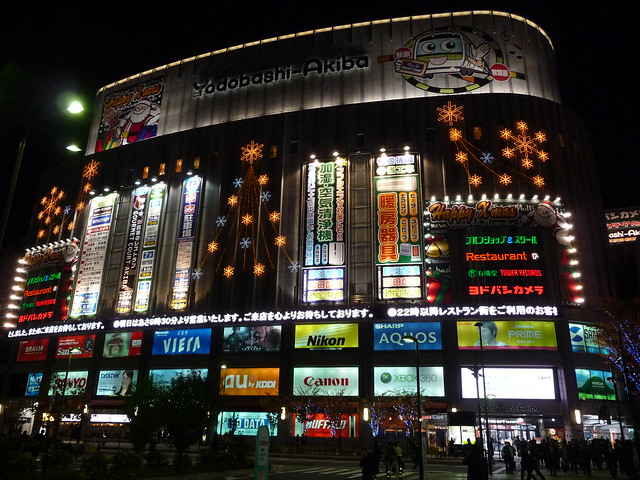
Pic: Akihabara, Tokyo, no particular reason other than it looks dead futuristic.
It is worrying to think about the impact that all this IP wrangling will have on product development in mobile and information and communications tech (ICT) in general. Sneaky portfolio acquisitions, tit-for-tat bickering over who can sell what phone in Australia or Germany, make it harder than ever to innovate on mass market products, while none of this benefits the end user. Meanwhile, there has been a noticeable shift in the behaviour of users around the world towards increased experimentation with technology. This is an observation rather than an empirical finding, but here's why I believe it to be true:
Throughout history when product categories have matured to a certain point, society begins to shape its own uses and meanings for the technology. This has been the case in mobile for a while.
The barriers that have previously restricted experimentation with ICT componentry are lifting thanks to modular kits like Arduino and Bug Labs or open source devices such as Open Moko that move invention from the lab to the bedroom, classroom or shed.
The ability to experiment with technology (creative hacking) has become more aspirational and widespread in society and the commercial world, with tech-forward consultancies like BERG prospering.
A great example of hackable technology is Microsoft's motion capture device, Kinect for XBox. The "fastest selling device of all time". Since it was released, the device has been adapted for hundreds of experiments, art installations, flying robots and performances on YouTube. I don't know if Microsoft expected this level of engagement with the Kinect, but they have certainly embraced it:
Rather than trying to "own" the consumer, Microsoft has provided an accessible tool with which people can build their own products and experiences that bridge the divide between physical and digital. With modular products such as Arduino or Lego's MindStorms and accessible programming applications like Google/MIT's App Inventor, or even Stencyl's game making platform, I believe these variations of co-creation will have a growing impact on all aspects of life, including education, retail, healthcare and even energy management. Remember that old saying: "in a gold rush it's the people who sell the spades who make the money first", I think now is a good time to get into providing these tools for creation. Profit from the long tail of small-scale product development rather than dredging the river-bed for margins in the mass market.
I would love to hear your opinions on these issues – get in touch on Twitter or in the comments below.
It's at the Human Centred Design Institute (HCDI), Brunel Design, Tower A, Room TA049, at 12:30-1:30pm on Monday 12th September 2011.
It's called: “Fashion and technology evolution and the design of consumer products.” You can read the abstract here.
I have a big favour to ask. I'm looking for sounds that are meaningful in people's lives. These might be sounds that immediately conjure up a memory, like the beep of your grandma's hearing aid when its battery is low; sounds that have changed in meaning, like that playful pop song that you used as an alarm and now it chills you to your core! It's for a workshop I'm running for MEX into the role of sound in the mobile user experience.
It would be awesome if you could record and send the sound, or a link to youtube, or just a description of it to me at amw@pmn.co.uk or a tweet to @muirface, explaining why it is meaningful.
My mate Jonny is running the London Marathon today for Sense, so we decided to make a sign to cheer him on (I hear 18 miles is the tough part). Good luck buddy - see you at the finish!
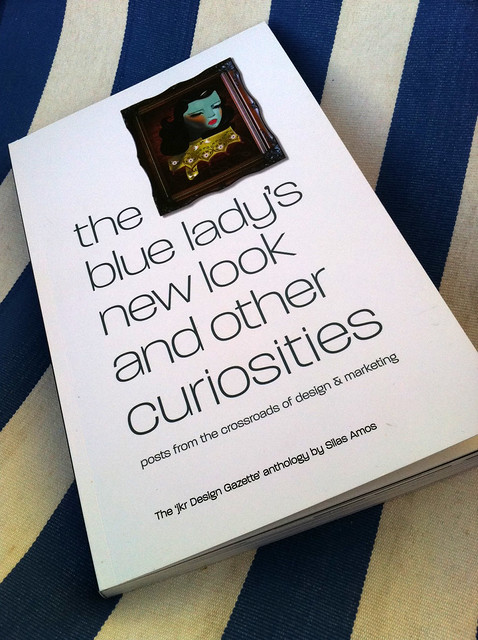
I just wrote a book review on ShellsuitZombie about the new jkr book, "The Blue Lady's New Look and Other Curiosities". It's a cracking collection of essays about design and brand strategy, definitely worth a look.
I went to an interesting event in Holborn last night called "Social Gaming to Gamification - Time to stop playing by yourself". It was all about applying a "game layer" to the way we interact with products and brands. This doesn't just mean having a little flash game on the website, it means tapping into the underlying playful nature that all humans have. One of the speakers, Nicholas Lovell, pointed us towards his 10 rules of gamification which provides an articulate exploration of the concept and the pitfalls of applying it to business. Quoting game researcher Richard Bartle, Lovell categorised different types of game behaviour that all gamers combine in different quantities: killers, achievers, explorers and socialisers. He explained that designers planning to apply game mechanics to their products should be able to empathise with all of these characteristics.
Matt Maxwell from digital agency Blue Barracuda came up with some interesting case studies of brands that have "winning" as part of their core message. He said that Nike have built up a platform of competition with their online fitness community and iPod tie-ins, but explained that the message was already embedded in their products. He described how Persil have updated their "win condition" (a concept devised by Tim Jones of BBH), from simply having a very clean family and home, to having a very active family who get dirty from running around being healthy outdoors, then get clean again thanks to Persil. Some other examples of services that use game mechanics are obviously Foursquare, Gowalla and Hunch. But also think about Ebay (remember how exciting it used to be to win an auction!!) and Google Analytics (tweaking a website, then watching the resultant behaviour of site visitors is a never-ending game).
The event took the format of a panel discussion, chaired by a very provocative Tony Fish, who kept the 2-hour discussion fizzing along and prevented the panellists from launching into personal diatribes. It was a fascinating insight into the use of game mechanics to influence the behaviour of consumers. Gamification has the potential not just to make consumers engage more with brands, but also to incentivise society to pursue healthy lifestyles, education and recycling.
Edit: Should probably mention the app developer Scvngr after their prominence at this year's SXSW, heralding a new generation of location-based games in which users create their own challenges (thanks Rob)
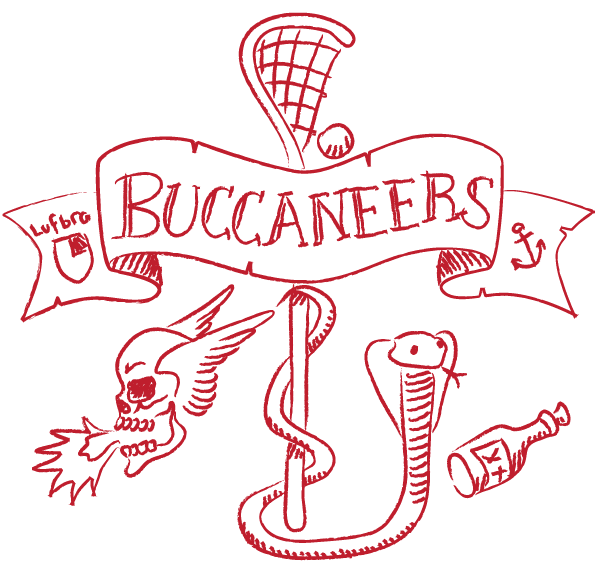
Working on a tshirt for my alumni lacrosse team to wear to a tournament later this month. It's a continuation of the nautical theme that seems to be emerging in my life and work, with a strong Sailor Jerry tattoo influence in there too.
At last Thursday's Glug creative drinks event in London (not www.glug.co.uk, but that looks fun too), I was struck by Catherine Lock's passionate presentation about authentic British craft skills being taken to the grave by elderly craftspeople. One of the products she discussed was the Gansey Jumper, a highly durable, hand knitted, weatherproof sweater favoured by fishermen, often with ornate patterns woven in. They have recently been finding their way onto the catwalk for Meadham Kirchhoff at London Fashion Week. Lock showed some awesome pictures of rustic, weatherbeaten sea-dogs (see above) and it got me thinking:
When this whole cowboy/lumberjack, plaid shirt, True Grit, wild west trend ends, what will fill the void? Will we swing to a strongly opposing mindset and associated style, or will the gunslingers be replaced with another rugged hero? I think that the windswept fisherman could be a likely candidate. Perhaps with a Scandinavian twist - for a while now there's been a growing influx of Scandinavian films, TV series, Christmasy knitwear and product design. Rare Exports was one such film that had a very strong aesthetic (see below). We will have to see how this year unfolds, but certainly the purchase of high quality, physically and emotionally durable products is a step in the right direction from a sustainability perspective.